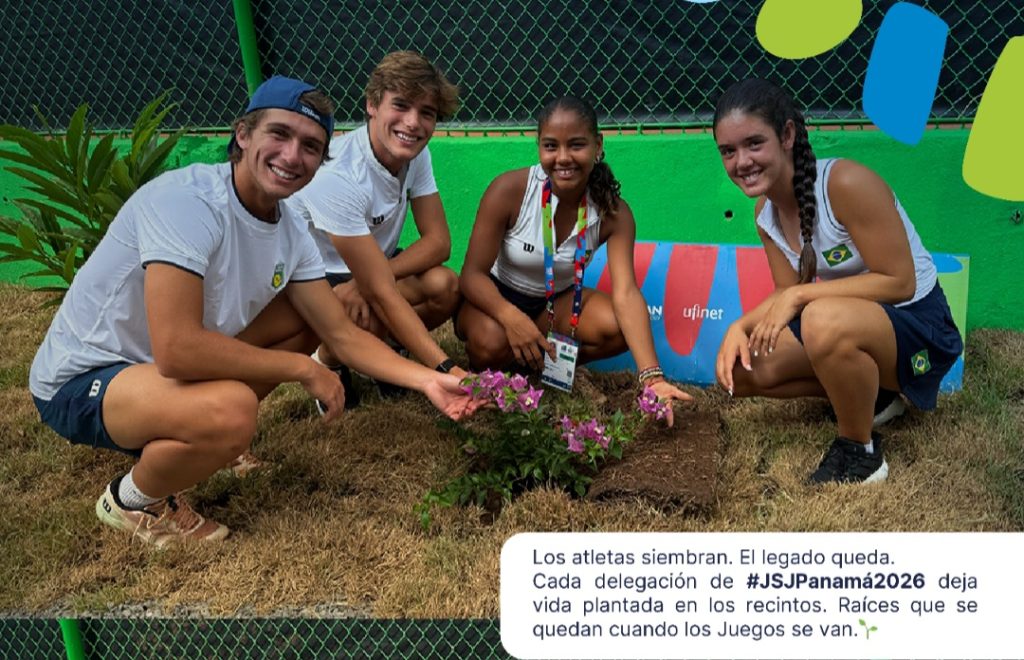
One of the most interesting aspects is that, for the first time, the JSJ ODESUR has an exclusive sustainability sponsor called CONVIERTE, a company that manages recycling waste and, during the Games, supports the entire recycling and waste management process for plastic, aluminum, and other recyclable materials generated. Finally, suppliers will be required to provide certificates of final waste disposal.
Convinced of the positive impact of these Games, Alejandro Bacot, Director of Sustainability of the IV South American Youth Games Panama 2026, referred to the presence of a Titi monkey on April 16 near the CAR, as well as iguanas and the presence of seven different bird species, as part of the strategy for the conservation of flora, fauna, and biodiversity.
The sustainability strategy includes five major points, including a monitoring and control system for the different operational areas that are key to the organization’s environmental impact, such as transportation, logistics, food, waste, energy, among others.
This strategy includes procurement with sustainability standards, followed by the environmental line with the circularity of goods, and the measurement of the carbon footprint through the “My Corporate Footprint” system from MI AMBIENTE.
At the different venues of the IV South American Youth Games, we can find hydration stations so that people can bring their own bottles to stay hydrated, recycling bins, and people are encouraged to use public transportation.
Alejandro Bacot emphasized that the organization reports all indicators in the sustainability report in the most transparent way possible, and the goal is to prevent as many Games-related products as possible from ending up in landfills.
In the middle of this biological corridor, which received more than 2,000 athletes competing in 23 sports, is also our mascot “Antón,” the Golden Frog, whose scientific name is Atelopus zeteki. It represents the fight to conserve and reduce the risk of extinction of this species, which originated in the mountains of Valle de Antón in the province of Coclé. Today, a group of scientists from the EVACC Foundation is dedicated to the care, protection, awareness, and reproduction of these amphibians.
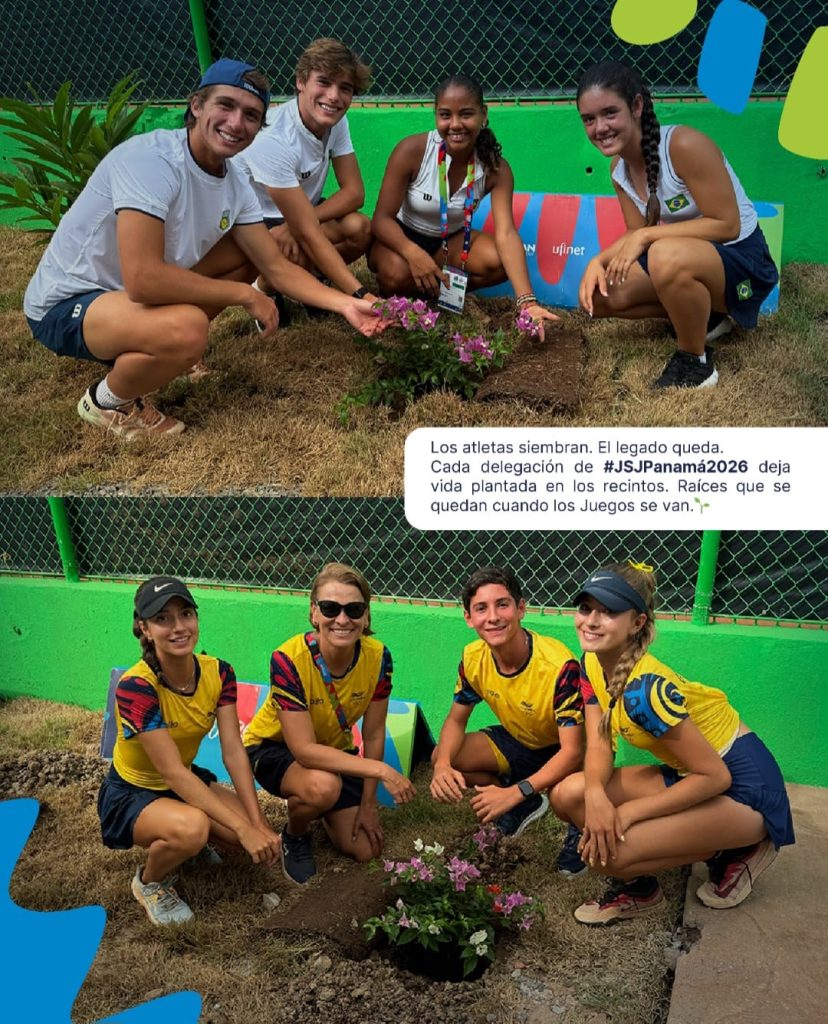
Antón also represents every athlete who, despite difficulties, continues training, working, and fighting with every drop of sweat and every tear, amid exhaustion, but with certainty and optimism in building their dreams without giving up on this path of the Olympic cycle toward Los Angeles 2028.
The conservation we can carry out today has a huge impact on the sporting development of all our athletes, allowing us to have more venues with lower temperatures, clean water, and clean air. It is everyone’s responsibility to ensure that both indoor and outdoor sports facilities are in the best possible condition and to preserve our ecosystems.